
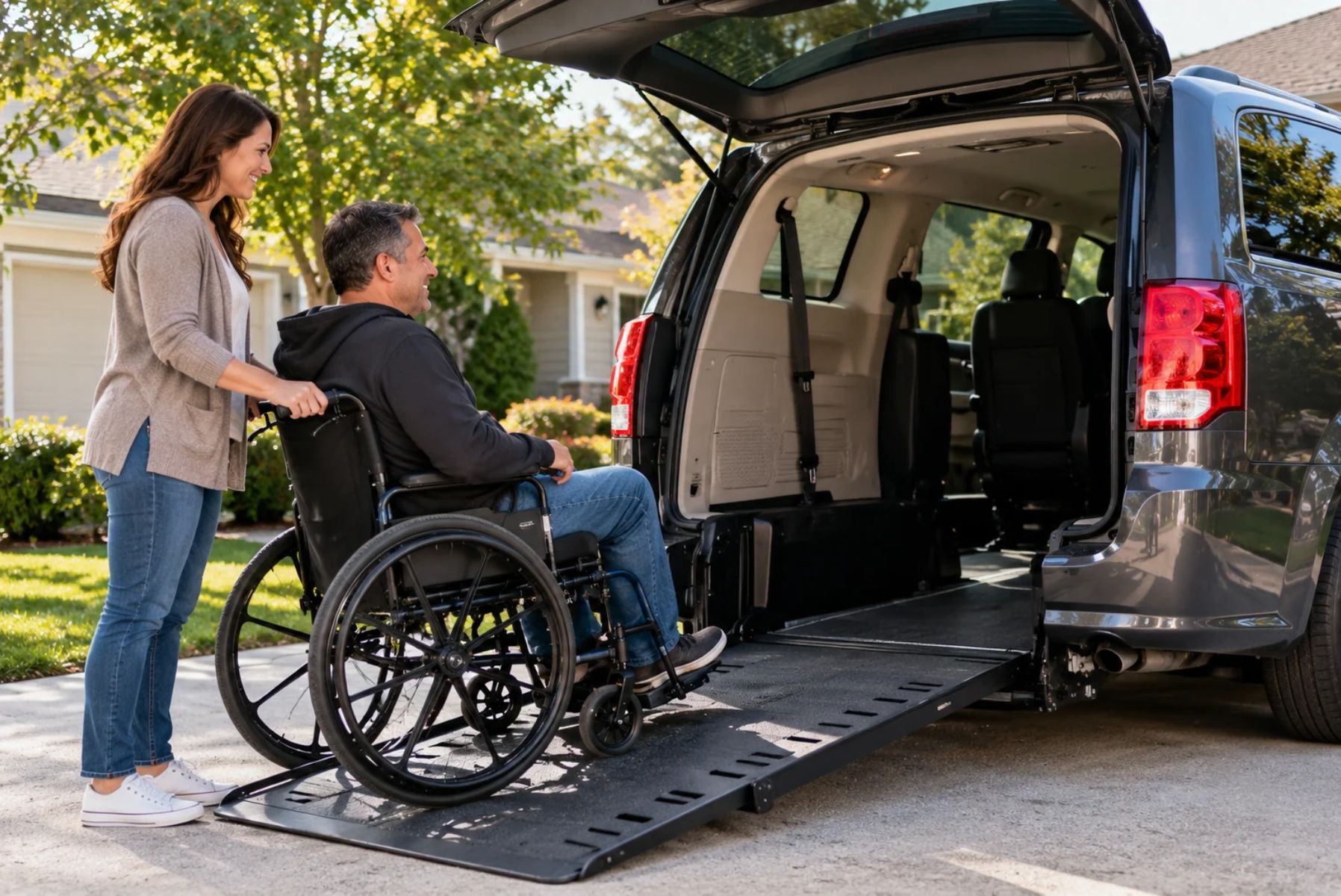
Sometimes, yes. Most lenders ask for a down payment, but no down payment wheelchair van financing may be possible depending on your credit, trade-in value, and conversion type. If you're short on cash and need a vehicle soon, this guide explains how it works and what else can lower your upfront costs.
Key Takeaways
- Most cases require a down payment, but not every buyer needs a traditional one.
- Credit scores, trade-in value, and conversion type all influence the decision.
- We evaluate applicants and down payments case by case.
- Rebates, grants, and VA benefits can reduce how much you need to borrow.
- Skipping the down payment usually means a larger loan and more interest over time.
What Is a Down Payment on a Wheelchair Van?
A down payment is the money you pay upfront toward a vehicle's price. It lowers the amount you borrow and shows the lender you have a stake in the purchase. Because conversions raise the price of a wheelchair van, even a modest down payment can noticeably reduce your monthly payment.
Is No Down Payment Wheelchair Van Financing Possible?
It can be, but it isn't automatic. Falls Mobility says most cases require a down payment. Depending on credit scores, trade-in value, and conversion type, financing without a traditional down payment may be possible.
Each applicant is evaluated case by case. Term limits and loan-to-value restrictions may also apply, meaning the lender caps how much it finances compared with the vehicle's value.
What Factors Decide Whether You Can Skip the Down Payment?
Lenders weigh several pieces together, not one number.
- Credit score and history: Stronger credit gives lenders more confidence.
- Trade-in value: A vehicle you trade in can serve the same purpose as a down payment.
- Conversion type: The conversion affects the vehicle's value and how the loan is structured.
- Loan-to-value ratio: A price that stays close to the vehicle's worth is easier to approve.
- Income and budget: The payment needs to fit comfortably within your finances.
No Down Payment vs. Putting Money Down
| Factor | No Down Payment | With a Down Payment |
|---|---|---|
| Amount financed | Larger | Smaller |
| Monthly payment | Higher, all else equal | Lower |
| Total interest | Usually more | Usually less |
| Approval | Depends more on credit and trade-in | Often easier |
| Upfront cash needed | Little or none | Required |
How Can You Lower Upfront Costs Without a Big Down Payment?
If cash is tight, look for ways to shrink the loan before you apply.
- Manufacturer rebates: Ford, Chrysler, Dodge, Toyota, and Honda offer rebates only available for wheelchair accessible vans. See Falls Mobility's mobility rebates page.
- Grants and financial aid: State, nonprofit, and other programs may help. Browse financial aid and grants for options.
- VA benefits: Eligible veterans may qualify for the VA automobile allowance and adaptive equipment grant.
- A trade-in: Your current vehicle can offset the need for cash.
- A pre-owned van: A lower price means a smaller loan and down payment.
How Do You Explore Financing With Little or No Money Down?
1. Check Your Credit
Review your reports and fix any errors first.
2. Estimate Your Trade-In
Know what your current vehicle is worth.
3. Gather Incentives
Line up rebates, grants, or VA benefits you may qualify for.
4. Apply Online
Submit a credit application so a lender can review your situation.
5. Move Within 30 Days
Falls Mobility says rates and approvals are good for 30 days from the original request.
What Mistakes Should You Avoid?
- Choosing a lender only because it advertises zero down
- Focusing on the monthly payment and ignoring total interest
- Overlooking rebates that could shrink the balance
Frequently Asked Questions
Does no down payment mean a higher interest rate?
Not necessarily, since rates depend on your credit and loan structure. A smaller down payment means a larger balance, which can increase total interest. Ask your lender to compare offers with and without a down payment.
Can a trade-in replace a down payment?
Often, yes. Falls Mobility lists trade-in value as a factor in whether a traditional down payment is needed. Your trade-in value and loan-to-value ratio still matter.
Is a longer term a good way to offset zero down?
It can lower your monthly payment, since retail loans can run up to 10 years, but you pay more interest overall.
Can I finance a used wheelchair van with little down?
Possibly. Falls Mobility finances new and used accessible vehicles. A used van often lowers the upfront amount needed.
Do rebates count as a down payment?
Not automatically. Rebates reduce your cost, but each program has its own rules. Ask your dealer and lender how a rebate applies.
Final Thoughts
No-down-payment wheelchair van financing is possible, but it depends on your credit, trade-in, and conversion type. Compare the total cost, use every rebate and grant available, and work with a lender that evaluates your whole situation.
Ready to see your options? Apply for wheelchair van financing with Falls Mobility and learn what you may qualify for.